
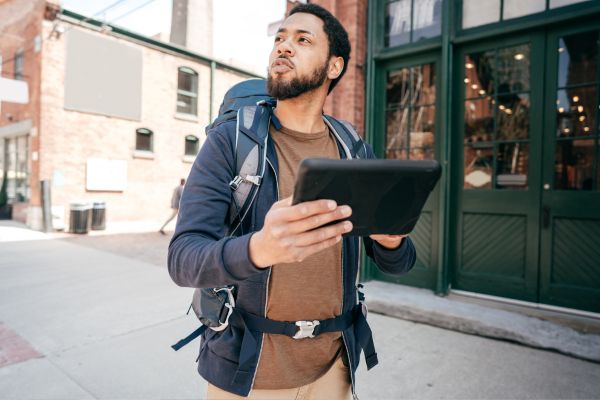
Travel has a way of making ordinary days feel wider. A new city, a different language, a late-night train, a hotel room that does not feel quite familiar yet — all of it can be exciting, but it also asks for a little awareness. Most travelers do not want to move through the world feeling anxious. They simply want to feel prepared. That is where travel safety gadgets can make a real difference.
The best gadgets are not the ones that make you feel like you are preparing for danger at every corner. They are the quiet, practical tools that help you avoid small problems before they grow. A dead phone, a misplaced bag, an unlocked hotel door, or a dark street between the station and your accommodation can turn a good trip into a stressful one. With a few smart items in your bag, travel feels calmer and more manageable.
Why Travel Safety Gadgets Matter
Good travel safety begins with habits: watching your surroundings, keeping copies of important documents, staying in touch with someone you trust, and planning routes before you leave. Gadgets do not replace common sense, but they can support it.
A small tracker can help you locate luggage. A portable charger can keep your phone alive when you need maps or emergency contacts. A door lock can help you sleep better in a room that does not feel fully secure. These items are not about fear. They are about control.
Many travelers learn this after one uncomfortable experience. Maybe their phone battery died during a long layover. Maybe their backpack disappeared from a bus storage compartment. Maybe they arrived at a guesthouse late at night and wished they had something extra for the door. Small tools often become valuable only after you have needed them once.
Portable Door Locks for Hotel Rooms
One of the most useful travel safety gadgets is a portable door lock. It is small, lightweight, and easy to pack, but it can add an extra layer of security in hotels, hostels, rental apartments, and guesthouses.
Not every room feels the same. Some doors have weak locks, loose handles, or shared access points. A portable lock helps prevent the door from being opened from the outside, even if someone has a key. It is especially useful for solo travelers, women traveling alone, or anyone staying in unfamiliar budget accommodation.
There is something comforting about being able to secure your space at night. You may never need the extra protection, but it can help you sleep more peacefully, and that matters when you are far from home.
Personal Safety Alarms
A personal safety alarm is simple but effective. It usually works by pulling a pin or pressing a button, which releases a loud sound meant to attract attention. It does not require special training, and it is legal in many places where other self-defense tools may not be allowed.
This kind of gadget is helpful in crowded markets, quiet streets, parking areas, hiking paths, and public transport stations. The goal is not confrontation. The goal is to create noise, break the moment, and draw attention quickly.
Personal alarms are also useful because they are easy to carry. They can attach to a keychain, bag strap, or jacket zipper. Unlike many gadgets, they do not require a phone signal or internet connection. In a tense moment, that simplicity can be important.
Smart Luggage Trackers
Lost luggage is not always dangerous, but it can create serious stress. A smart luggage tracker can help you know where your bag is, especially during flights, long bus rides, train transfers, or multi-city trips.
These small tracking devices fit inside a suitcase, backpack, camera bag, or purse. If your luggage is delayed, misplaced, or accidentally taken by someone else, the tracker can help you narrow down its location. This is particularly useful when airline updates are slow or unclear.
Travelers carrying expensive equipment, important medicines, or work items may find trackers especially helpful. They are also useful for family trips, where multiple bags can easily get mixed up. A tracker will not stop every problem, but it can reduce uncertainty, and uncertainty is often the most stressful part of losing something.
Anti-Theft Backpacks and Bags
An anti-theft backpack is designed to make casual theft more difficult. These bags often include hidden zippers, lockable compartments, cut-resistant material, and pockets placed against the body. They are useful in crowded tourist areas, public buses, metro stations, festivals, and busy streets.
The value of an anti-theft bag is not just in the design. It also changes how you carry your belongings. When your passport, wallet, phone, and cards are stored in harder-to-reach spaces, you move with more confidence.
Still, even the best anti-theft backpack needs sensible use. Do not leave it hanging on the back of a chair in a café. Do not place it loosely under a table where you cannot feel it. Safety gadgets work best when paired with small, careful habits.
Portable Power Banks
A portable power bank may not look like a safety device, but it is one of the most important travel safety gadgets you can carry. Your phone is often your map, translation tool, camera, boarding pass, payment method, emergency contact list, and ride-booking device. When it dies, you lose more than entertainment.
Long travel days can drain batteries quickly. Using mobile data, navigation, photos, and airport Wi-Fi can leave your phone almost empty before you reach your destination. A reliable power bank keeps you connected when you need directions, hotel details, or help.
For longer trips, choose a power bank with enough capacity for at least one full phone charge. Keep it charged before travel days, not buried empty at the bottom of your bag. It is a basic habit, but it can save a lot of trouble.
RFID-Blocking Wallets and Passport Holders
Digital pickpocketing is not something every traveler will face, but many people prefer the peace of mind that comes with RFID-blocking wallets or passport holders. These accessories are designed to help protect contactless cards and certain documents from unauthorized scanning.
The bigger benefit may be organization. A good passport holder keeps your passport, boarding pass, cards, emergency cash, and copies of documents in one place. When you are moving through airports, border control, or hotel check-ins, being organized helps prevent panic and mistakes.
However, it is wise not to keep everything in one wallet. Carry a backup card or some emergency cash separately. Safety is often about layers, not one perfect solution.
Travel Flashlights and Mini Torches
A small flashlight is easy to overlook until you need one. Phone flashlights are useful, but they depend on battery life, and they are not always comfortable to hold for long. A compact travel torch can help during power cuts, night walks, camping, roadside stops, or late arrivals at unfamiliar accommodation.
In some destinations, street lighting may be uneven. In others, rural stays or older guesthouses may have occasional outages. A flashlight gives you a little independence. You can check a dark stairway, find something in your bag, or move around safely without draining your phone.
For backpackers and outdoor travelers, a headlamp may be even better. It keeps both hands free and is useful for hiking, camping, or navigating shared rooms without disturbing others.
Portable Travel Safes
A portable travel safe is a small lockable pouch or container that can be attached to a fixed object. It is useful when you need to leave valuables in a room, at the beach, in a hostel locker, or inside a car for a short time.
No portable safe is impossible to break, and it should not create false confidence. But it can discourage quick theft and protect items from being easily grabbed. For passports, extra cash, memory cards, or small electronics, it adds another layer of protection.
This gadget is most helpful for travelers who carry valuable equipment or stay in shared spaces. It is also useful for beach trips, where leaving a phone and wallet under a towel is never a great idea.
Emergency Whistles and Signal Tools
An emergency whistle is one of the simplest travel safety items, but it can be surprisingly valuable. It is louder than shouting, easier to use when tired, and helpful in outdoor settings where sound needs to travel.
Hikers, campers, cyclists, and solo travelers can benefit from carrying one. It can also be useful in crowded events or unfamiliar areas if you need attention quickly. Many backpacks already include a whistle built into the chest strap, but not everyone notices it.
Signal mirrors and small emergency lights can also be helpful for adventure travel. For city breaks, they may be unnecessary. For remote trips, they can be worth carrying.
VPN Apps and Digital Safety Tools
Not every travel risk is physical. Digital safety matters too. Public Wi-Fi in airports, cafés, hotels, and train stations can be convenient, but it is not always secure. A trusted VPN app can help protect your connection when using shared networks.
Password managers, two-factor authentication, and cloud backups are also part of modern travel safety. If your phone is lost or stolen, you should still be able to access important accounts and documents from another device.
Before a trip, save digital copies of your passport, visa, insurance, hotel bookings, and emergency contacts. Store them securely, not just in your phone gallery. A little preparation can make a difficult situation much easier to handle.
Choosing the Right Gadgets for Your Trip
Not every traveler needs every gadget. A weekend city break, a family resort holiday, a solo backpacking route, and a remote hiking trip all have different needs. The smartest approach is to think about your actual risks.
For city travel, an anti-theft bag, power bank, luggage tracker, and personal alarm may be enough. For hotel stays, a portable door lock can be useful. For outdoor travel, a flashlight, whistle, emergency light, and offline maps become more important. For digital-heavy travel, focus on backups, secure passwords, and safer internet habits.
The goal is not to overpack. Too many gadgets can become another burden. Choose items that are small, practical, legal in your destination, and easy to use under pressure.
Conclusion
Travel safety is not about expecting the worst. It is about giving yourself a little more confidence when plans change, streets feel unfamiliar, or small problems appear at the wrong time. The right travel safety gadgets can help you protect your belongings, stay connected, secure your room, and move through new places with more peace of mind.
A well-packed bag does not need to be full of complicated devices. Sometimes, a power bank, a door lock, a tracker, a personal alarm, and a good flashlight are enough to make a trip feel smoother and safer. In the end, smart travel is not about fear. It is about freedom — the kind that comes from knowing you are prepared without letting worry take over the journey.